What Is a Shot Plate? Guide to Shot Plates for Silversmithing | BRC
What Is a Shot Plate?
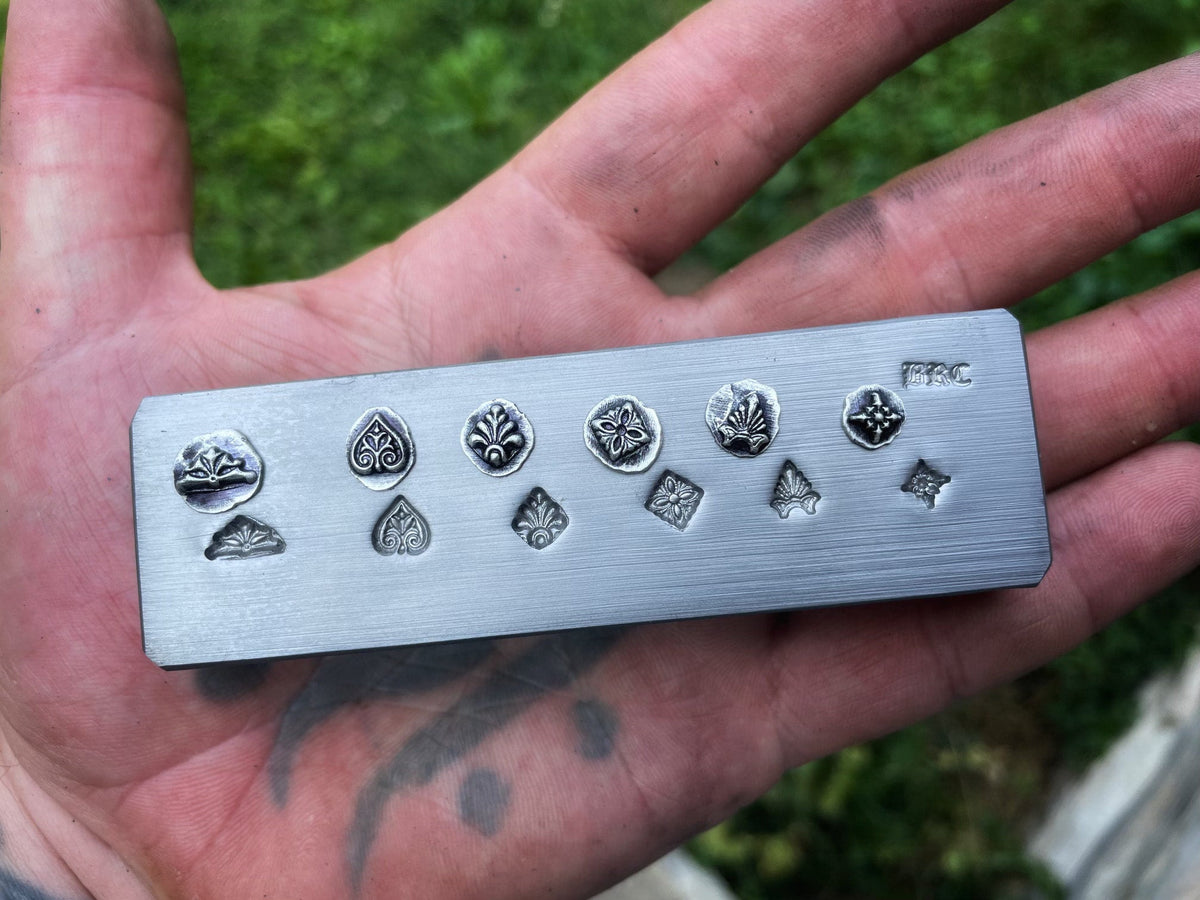
A shot plate is a thick steel block with designs carved into its surface — skulls, roses, arrows, sacred
hearts, you name it. You place annealed metal over the design, hit it with a hammer or use a hydraulic
press, and the design transfers into your metal as a raised impression.
Think of it like a rubber stamp, but for silver.
Shot plates are used by silversmiths, jewelers, and metalworkers to create detailed embossed designs on
rings, pendants, earrings, conchos, and more — without needing to hand-engrave every piece from scratch.
How Does a Shot Plate Work?
The process is straightforward:
1. Anneal your metal. Heat your silver, copper, or brass until it's soft and workable. This is critical —
hard metal won't take a clean impression.
2. Place the metal over the design. Center your blank over the carved impression on the shot plate.
3. Apply force. Use a hammer, mallet, or hydraulic press to push the metal down into the carved design. The
metal conforms to the shape and picks up every detail.
4. Trim and finish. Cut away the excess metal around your impression, file the edges, and finish as needed.
The deeper the carving on the shot plate, the more dramatic the raised design on your finished piece.
That's why hand-forged shot plates with deep, detailed carvings produce results that cheap machine-stamped
plates can't touch.
Shot Plates vs. Metal Stamps vs. Impression Dies — What's the Difference?
These terms get thrown around interchangeably, but they're different tools:
- Metal stamps are individual punches — one design per tool. You strike them with a hammer to leave an
impression. Great for lettering and small marks, but limited to flat impressions.
- Impression dies are similar to shot plates but usually feature a single design. They're the carved steel
piece that creates the shape.
- Shot plates combine multiple impression dies into one plate. A single shot plate might have 4, 6, or even
9 designs on it, giving you a whole collection of options in one tool.
If you're just getting started in silversmithing, a shot plate gives you the most versatility for your
money. One plate, multiple designs, endless pieces.
What Metals Work With Shot Plates?
Shot plates work best with soft, annealed metals:
- Sterling silver — the most popular choice for jewelry
- Fine silver — even softer, takes impressions beautifully
- Copper — affordable and great for practice
- Brass — harder than copper but still workable when annealed
- Gold — works perfectly, just costs more to practice with
The key is annealing. If your metal isn't soft enough, you'll get a shallow, muddy impression instead of
crisp detail. Heat it, quench it, and work it while it's soft.
How to Choose the Right Shot Plate
Not all shot plates are created equal. Here's what matters:
Design depth. Deeper carvings = more dramatic raised designs on your metal. Hand-forged plates carved by
experienced silversmiths will always outperform mass-produced ones. The detail and depth just aren't
comparable.
Steel quality. Your shot plate needs to be harder than the metal you're pressing into it. Quality tool
steel holds up over thousands of impressions without wearing down.
Design variety. If you're making jewelry to sell, you want options. Custom shot plates let you pick exactly
which designs you want — no wasted space on designs you'll never use.
Size. Larger designs work for pendants, belt buckles, and conchos. Smaller designs are ideal for earrings,
rings, and delicate work. Know what you're making before you buy.
Why Hand-Forged Beats Machine-Made
Mass-produced shot plates are stamped out by machines with shallow, generic designs. They work, but the
impressions are flat and lifeless.
Hand-forged shot plates are carved by hand into solid steel. Every cut is intentional. The designs are
deeper, the details are sharper, and the finished impressions have a dimension that machine-made plates
simply can't replicate.
It's the difference between a photocopy and an original. Your customers can tell.
Getting Started
If you're new to silversmithing, here's the minimum you need to start using a shot plate:
- A shot plate with designs you actually want to use
- Sheet metal — start with copper for practice, move to silver when you're confident
- A torch for annealing (a basic butane torch works)
- A hammer or mallet — a rawhide mallet won't mar the surface
- A bench block — a solid steel surface to work on
- Files and sandpaper — for cleaning up your finished pieces
That's it. No years of apprenticeship. No $5,000 hydraulic press (though those are nice). Just steel, fire,
and force.
Ready to Start?
Every shot plate we make at Buffalo Rutland Company is hand-forged in our East Tennessee workshop from
solid American steel. We've been making silversmith tools since 2013 — not because it's trendy, but because
it's what we do.
Browse our shot plates, pick your designs, and start making pieces that actually stand out.